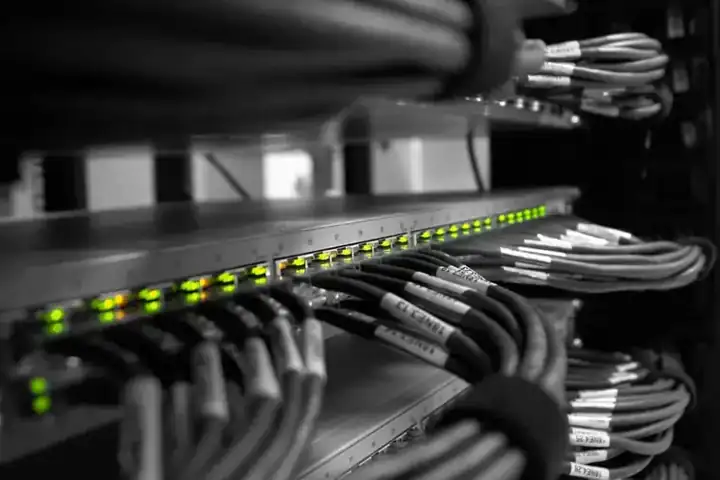
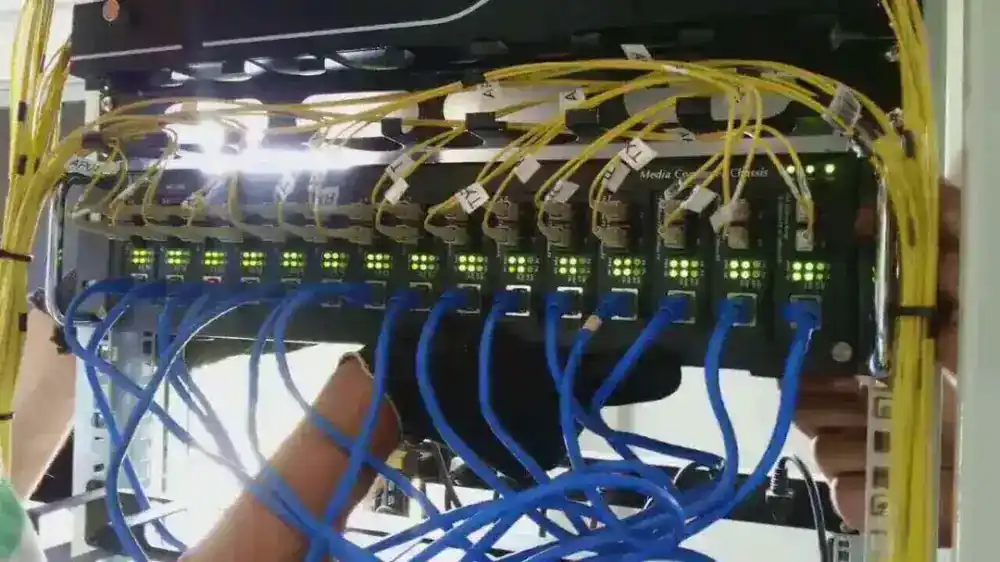
A NOC exists so that the fault is ours before it is yours. The result for the business is fewer hours of downtime, fewer surprises and a record of everything that happened. DataRoad - IT Services and Consulting, a premium IT partner and MSP in Portugal headquartered in Alfragide (Lisbon), runs its own NOC (network operations centre) that continuously measures the servers, managed networks, workstations and internet connections of IT Unlimited clients, in Portugal and, remotely, across Europe and the USA. When an indicator goes out of range, the alert opens a ticket and, in most cases, is resolved before anyone in the company notices. 24/7 cover is reserved for the Premium 365 plan.
What changes for management with a proactive NOC?
It is no longer the company phoning because something has stopped. It becomes the MSP warning that something was about to stop and now will not. The difference is not the engineer's goodwill: it is a system that collects metrics without interruption, compares them with defined thresholds and triggers an alert with an owner.
At DataRoad that system is Zabbix, with dashboards in Grafana, connected to the ticketing system and the team's escalation chain. That connection is what turns a number on a chart into an intervention with a time, an engineer and a resolution.
What it costs and what is included
Monitoring is not sold separately: it is part of every IT Unlimited plan. Watching is always continuous; what changes is when we intervene.
| Plan | Price | Alert handling |
|---|
| Essential | from €395/month + VAT | Alerts handled during business hours, remotely and by phone; no site visits |
| Premium | from €750/month + VAT | Full management of the device fleet, unlimited on-site support and immediate response to critical incidents |
| Premium 365 | from €1,200/month + VAT | Remote and on-site intervention 24/7, including nights, weekends and public holidays, with a dedicated technical account manager |
Annual contract with automatic renewal, 60 days' notice and no lock-in.
What we monitor
- Physical and virtual servers CPU, memory, disk space, SMART and RAID, critical services, completed or failed backups, temperature and power supplies.
- Managed network Switches, access points, firewalls and routers: availability, latency, errors per port, uplink saturation, APs that drop and come back.
- Internet connections Main line and redundancy, response times and carrier faults detected before anyone complains.
- Workstations Pending updates, outdated antivirus, disks at their limit, devices that have stopped reporting.
- Cloud services Microsoft 365, client portal, website and other critical applications.
- Certificates, domains and licences Expiry dates with advance warning, so that an expired certificate does not take down email or the online shop on a Friday night.
What happens between the alert and the resolution
Severity defined in advance
A disk at 85% on a working day is a warning; a file server not responding is critical. Severity decides who is notified and through which channel: email, dashboard, SMS or phone call.
Immediate remote intervention
Freeing up space, restarting a service, restoring a connection, fixing a failed backup: most alerts are closed remotely. Every intervention is logged as a ticket and visible in the client portal.
A site visit when the cause is physical
Failed disk, burnt-out switch, cut line: the alert escalates to a site visit on the Premium and Premium 365 plans. On Premium 365 that visit also happens at night, at weekends and on public holidays.
Root cause and prevention
An incident that repeats is a defect. Recurring alerts are reviewed every month and lead to concrete recommendations — replace a device, increase capacity, redesign a network segment — set out in the monthly report.
| Criterion | Tool installed and abandoned | DataRoad managed NOC |
|---|
| Who sees the alerts | A mailbox nobody opens | Technical team with a defined escalation chain |
| Thresholds | Manufacturer defaults | Tuned per device and client, reviewed monthly |
| False alarms | Pile up until the tool is switched off | Fixed at source |
| After the alert | Depends on someone having time | Ticket, remote intervention, site visit if needed |
| History | None | Complete per device, in the client portal |
| Cost | Licence + hours of someone in-house | Included in the IT Unlimited contract |
What monitoring does not guarantee
It does not prevent every fault: a disk can die without warning, a carrier can cut the line without notice. What it does guarantee is immediate detection, immediate response and a record of what happened.
Nor does it replace backups or business continuity. They are complementary layers, which is why the contracts include all three: managed, tested backups and a disaster recovery plan.
Is Premium 365 worth it for my company?
It is when an hour of downtime costs more than a month of service: hotels with a 24-hour front desk, clinics with full schedules, teams across several time zones, embassies and organisations with availability requirements, logistics and retail with continuous billing.
If the company closes at 18:00 and nobody uses the systems until 9:00, monitoring is still worthwhile: overnight alerts are handled in the morning, before the team arrives. Premium 365's night-time cover may not be necessary.
DataRoad IT Unlimited
Talk to DataRoad. We assess your operation and propose the right plan.
Proof: six hotels on a single console
In Restauradores and Rossio, in central Lisbon, DataRoad installed and supports the infrastructure of six hotels with network, Wi-Fi, CCTV and PMS. One of them, the Ouro Rossio Hotel, has 30 Wi-Fi points, 55 cameras and a firewall.
All six share the same network architecture, security criteria and monitoring console. If an access point drops at three in the morning, the alarm reaches DataRoad before the front desk; if a switch starts accumulating errors, it is replaced before guests notice.
- 11 years Of managed services, since 2015.
- 232 clients And 1321 devices and more than 138 Ubiquiti sites managed.
- Top 5% PME Distinction awarded by scoring.pt.
- 5.0 from 52 reviews On Google.
What changes in the first month
- Survey — what exists, what is critical and what needs most attention.
- Installation — lightweight agents on servers and workstations; network equipment via SNMP or the manufacturer's API.
- Tuning — two to three weeks adjusting thresholds and severities to eliminate false alarms.
- Handover — access to the dashboards and the first monthly report.
How we measure the service
- Monitored inventory Every server, network device, connection and workstation, with its indicators.
- Thresholds and severities The value at which an indicator becomes a warning or critical, and who is notified.
- Intervention window That of the contracted plan and the agreed response time.
- Monthly history Alerts, interventions, resolution times and recommendations for recurring issues.
- Fleet status Equipment at end of life or out of warranty, and licences and certificates expiring in the next 90 days.
Frequently asked questions
Does monitoring read our files or emails?
No. It collects only technical metrics — space, availability, load, errors — with no access to the content of files, emails or databases. The data stays on infrastructure managed by DataRoad.
Does software need to be installed on the computers?
Yes, a lightweight agent on servers and workstations, with negligible resource use. Switches, APs and firewalls are monitored using protocols they already support, with no installation.
What if the alert fires at 3 in the morning?
It depends on the plan. On Essential it is logged and handled at the start of business hours; on Premium, critical incidents get an immediate response; on Premium 365 there is remote intervention and on-site attendance 24 hours a day, every day of the year.
Do we have access to the dashboards?
Yes. Each client sees the dashboards for its own estate and the history of alerts and interventions in the client portal, in addition to the monthly report.
Can you use the tool we already have?
Rarely. We assess it during the survey, but almost always migrate to our platform, because that is the one connected to ticketing and escalation.
Do you monitor Apple equipment?
Yes, macOS servers and workstations just like Windows and Linux. DataRoad is an Apple Technical Partner and has a dedicated offering for Apple fleets in businesses.
Who receives the alerts?
By default, our team, so the client's inbox is not flooded with noise. The person responsible in the company receives critical incidents and the monthly report; if you prefer to receive everything, it can be configured.
Do you cover several manufacturers?
Yes: Windows, Linux and macOS, virtualisation, UniFi networks and other manufacturers via SNMP, firewalls, printers, UPS and cloud services. Anything without a monitoring interface is watched for availability and response time.
Where the NOC is and which regions it covers
Next step: a no-commitment survey
Before you sign anything, we show you what your infrastructure is doing right now. No-commitment proposal.
More than 10 workstations · support contract · remote, on-site and phone support. Call +351 211 459 950* (working days, 9:30–13:00 and 14:00–18:30, Lisbon time) or write to sales@dataroad.pt.
*Call to a Portuguese landline.
DataRoad. One Step Ahead of IT.